
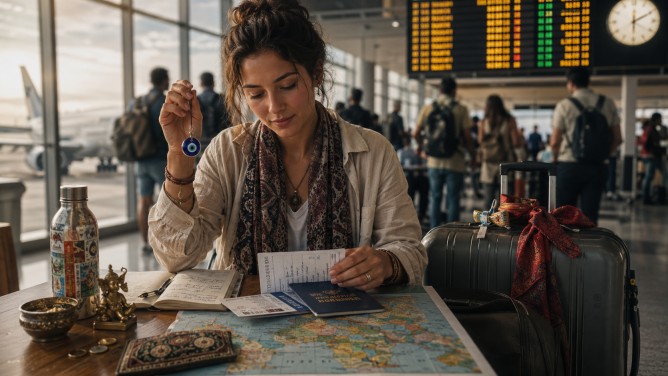
The allure of travel often lies in the small traditions and rituals that add a layer of intrigue to the journey. Across the globe, cultures have cultivated unique superstitions that promise to bring good fortune and safeguard travelers. These customs, rooted in history and belief, continue to be practiced by many as they embark on their adventures.
In the Balkan region, a common practice involves placing a clove of garlic inside one’s luggage. This age-old tradition stems from the belief that garlic wards off negative energies and the evil eye, thereby ensuring a safe and lucky journey. Similarly, many air travelers have adopted the habit of touching or tapping the exterior of an aircraft before boarding. This gesture is not only seen as a harbinger of good luck but also provides comfort to those who might feel anxious about flying.
Another widespread practice among travelers is stepping onto a plane with the right foot first. This act is more than just a saying; it is regarded as a literal step toward a successful and fortunate trip. Meanwhile, in parts of the Middle East and the Balkans, the act of pouring or sprinkling water behind a departing traveler is a cherished tradition. The flowing water is symbolic of a smooth and safe journey, with the expectation that the traveler will return safely.
Numerical superstitions also play a significant role in travel. In many Western countries, the number 13 is avoided due to its association with bad luck. In China, the number 4 is often shunned because its pronunciation is similar to the word for death. In contrast, the number 17 is traditionally considered unlucky in Italy. These beliefs can influence various aspects of travel, including hotel room assignments and building floors.
Cultural customs also extend to pre-departure rituals. In Slavic traditions, sitting quietly on packed luggage before setting off is believed to help travelers mentally prepare for their journey. Conversely, in several cultures, sweeping the floor immediately after someone leaves is considered to bring misfortune. The act of sweeping too soon may symbolically remove the traveler’s good luck or impede their safe return. Though these practices lack scientific backing, they are a testament to the rich tapestry of travel culture. For many, such rituals are cherished for their ability to preserve cultural identity and imbue the excitement of embarking on a new adventure.