
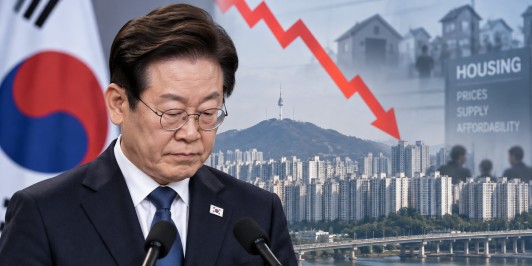
South Korean President Lee Jae-myung is facing a significant dip in public approval as he navigates his second year in office. According to a recent survey, 63.3% of South Koreans disapprove of his performance, while only 33.8% express support. This decline in approval is largely attributed to dissatisfaction with his administration’s housing policies and issues surrounding government appointments.
One major source of discontent is the government’s approach to housing, particularly in urban centers like Seoul. The administration has implemented stringent measures to curb property speculation, such as imposing tighter borrowing restrictions and increasing taxes on owners of multiple or high-value properties. However, critics argue these policies may exacerbate affordability issues for potential homeowners in cities where real estate prices are already high.
Adding to the administration’s challenges are political controversies, including the withdrawal of a ministerial nominee and allegations involving another. These incidents have fueled public frustration and contributed to the declining approval ratings. Within the ruling Democratic Party, there are growing concerns about how this may affect their performance in the upcoming parliamentary elections. Party members are eager to see if the government can regain public confidence in the next two years.
In response to the mounting dissatisfaction, President Lee’s administration has acknowledged the public’s grievances and is reportedly reviewing various issues, including housing, financial markets, and political appointments. Lee is anticipated to address these concerns and communicate directly with the public in the near future. The debate over housing has become particularly contentious in Seoul, where plans to develop land in the Yongsan district have sparked discussions about balancing new housing developments with the preservation of green spaces.
During his campaign, Lee promised to increase the housing supply while enhancing urban living conditions. Now, his government is under pressure to prove that its strategies can effectively tackle both the affordability and supply challenges without further alienating those trying to purchase homes. As his presidency progresses, Lee’s ability to adapt and address these pressing issues will be crucial in shaping his legacy and the future political landscape for his party.