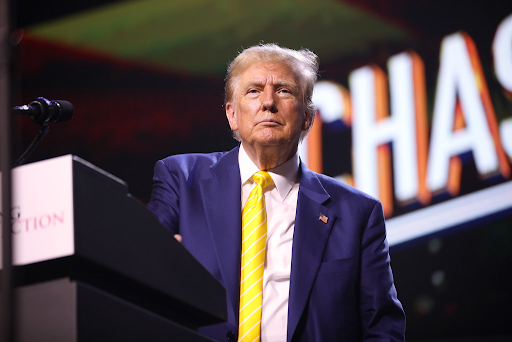
President Trump turned Saturday to a legal provision buried in a half-century-old trade law to justify a new 15% tariff on all imports — a move that stunned trade experts and world leaders alike just hours after the Supreme Court invalidated his previous tariff strategy.
Section 122 of the Trade Act of 1974 has sat unused since it was written. The provision allows a president to impose tariffs of up to 15% for up to 150 days without legislative approval, after which Congress must authorize any continuation. Trump’s administration says it plans to use that period to develop tariffs that will withstand future legal scrutiny.
The Supreme Court ruled 6-3 on Friday that Trump’s IEEPA-based tariffs required congressional authorization that had not been sought. Trump’s response was swift and angry. He condemned the ruling as “ridiculous” and launched personal attacks against justices in the majority, calling his own nominees Barrett and Gorsuch “an embarrassment to their families.”
International trade partners are watching the situation with deep unease. Germany’s Chancellor Merz announced a planned visit to Washington with a coordinated European response, calling tariff unpredictability “poison” for economic confidence. France’s Macron praised the court’s original decision while criticizing unilateral trade actions. The UK, which had negotiated a 10% deal, now faces a higher and less certain baseline.
With $130 billion in tariffs already collected — and 90% of that paid by American businesses and consumers — the new 15% rate promises further strain on domestic wallets. Exemptions cover critical minerals, metals, pharmaceuticals, and USMCA-compliant goods. Whether the new legal strategy survives court scrutiny remains an open question.