
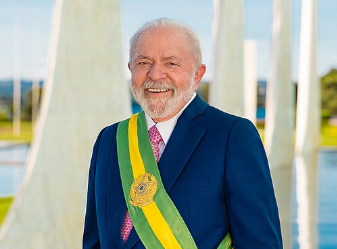
Brazil’s President Lula da Silva has announced his intention to reject legislation that would provide significant sentence reductions for those convicted in the 2022 coup attempt. The bill passed both congressional chambers this week, with the senate approving it late Wednesday. Former President Jair Bolsonaro, currently serving more than 27 years for orchestrating the failed coup, would be among the primary beneficiaries.
In comments to reporters, Lula articulated his position that individuals who attack democratic institutions must face appropriate consequences. The president acknowledged the political reality that the conservative-majority congress could override his veto, demonstrating awareness of the complex power dynamics at play. This transparency provides insight into the potential constitutional confrontation ahead.
The legislation’s practical effects would be substantial, with experts calculating that Bolsonaro’s minimum time in maximum-security confinement could decrease from six years to approximately 25 months. This reduction relies on a mechanism that consolidates sentences for related offenses while applying only the punishment for the most serious crime. Standard sentence reduction programs for behavior and education would provide additional benefits.
The former president currently resides in a specialized cell at federal police headquarters designed for high-profile prisoners. His legal representatives are simultaneously pursuing authorization for medical procedures, specifically hernia surgery. The family’s public reaction has balanced recognition that the legislation falls short of complete amnesty with appreciation for the partial relief it provides.
The bill affects all individuals convicted in connection with the coup attempt, including high-ranking military officials and civilian participants in subsequent violence. This comprehensive application has troubled advocates for democratic accountability, who had celebrated the original convictions as significant progress. Recent polling indicates that most Brazilians support maintaining the original sentences, highlighting a disconnect between legislative action and public sentiment.