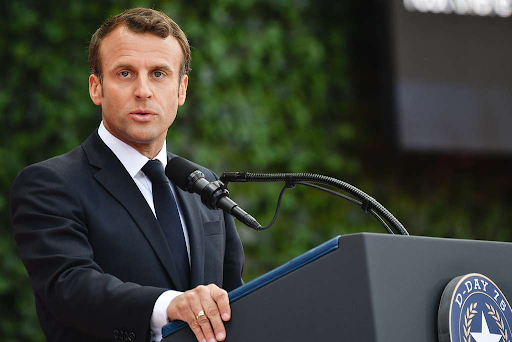
There is something clarifying about the way Emmanuel Macron has framed the global AI debate. While others discuss compute power, model parameters and national competitiveness, the French president keeps returning to a question that is harder to commodify: what happens to the children? His speech at the AI Impact Summit in Delhi was the most recent expression of this priority, and it deserves to be taken seriously.
The facts Macron cited are not in dispute. Research by Unicef and Interpol found that 1.2 million children in 11 countries had been victimised by AI-generated explicit deepfakes in just one year. One in 25 children in some nations. These are crimes enabled by freely available technology and facilitated by platforms that have repeatedly demonstrated their inability or unwillingness to self-regulate. Macron’s response — legislation, international coordination, platform accountability — is proportionate to the scale of the problem.
His defence of European regulation against American criticism is also worth noting. The Trump administration’s position, as articulated by its AI adviser, is that regulation is inherently anti-innovation. Macron’s reply is empirically grounded: Europe has not stopped innovating, and the safety standards it has developed create conditions for sustainable, trustworthy technology development. This is not a niche European argument — it is increasingly the position of democratic governments worldwide.
The summit featured many powerful voices on AI governance. António Guterres warned of AI monopolies and called for the technology to be treated as a global commons. India’s Modi made the case for open-source development. Sam Altman, with startling frankness, predicted that AI could soon house more intellectual capacity than humanity itself. In this company, Macron’s insistence on child safety is not a small concern — it is the most pressing test case for whether AI governance can actually protect people.
France’s proposed ban on social media for under-15s is a concrete expression of political seriousness. It may be imperfect, contested and hard to enforce, but it signals a willingness to act rather than merely deliberate. That willingness — combined with the platform of the G7 presidency — gives Macron a genuine opportunity to move the needle. The children whose images were weaponised last year are not waiting for a consensus document. They need governments to act, and Macron is at least trying to make that happen.