
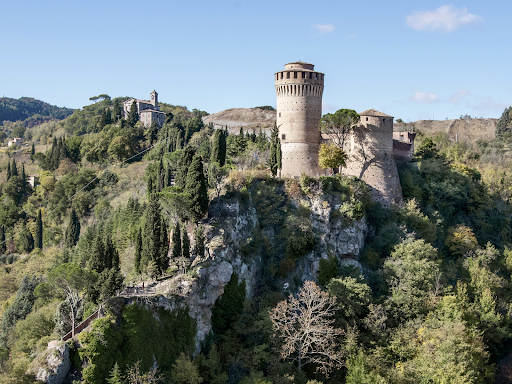
Italy’s quieter corners often combine striking landscapes with deep history. In Emilia-Romagna, Brisighella offers visitors cliffs, lone towers and a sense of stepping into another time as they approach the town. It’s dramatic without feeling staged.
Inside the old centre, medieval streets and steep stairways lead up to an elevated walkway that grants intimist views over the town and hills. It’s a space made for wandering, sitting with a coffee, or heading out on footpaths beyond the buildings.
On Sicily’s Via dei Frati, adventure takes the form of a 54-mile trek from Caltanissetta to Cefalù. The route crosses the Madonie mountains, where you can walk all day without seeing other travellers. Villages such as Gangi mark each evening with local food and a chance to share stories in whatever languages are available.
Basilicata’s Venosa provides a dense chapter of Roman and medieval history in one place. Ancient ruins, catacombs and a substantial castle reveal its once-powerful status. The neighbouring castles of Melfi and Lagopesole and the ducal palace at Pietragalla extend that story across the landscape.
Complementing these are an off-grid eco-hotel in the Apennines, Cividale’s stunning Tempietto Longobardo and emerald Natisone River, Chioggia’s canals and Adriatic sands, Santo Stefano d’Aveto’s mountain ridges and mines, Piedmont’s Loazzolo with its hazelnuts, truffles and sweet wines, Campoli Appennino’s waterfalls and bear sanctuary, and Urbs Salvia’s remarkably preserved Roman remains near Urbisaglia. Together, they paint a different map of Italy: rich, varied and remarkably under-visited.