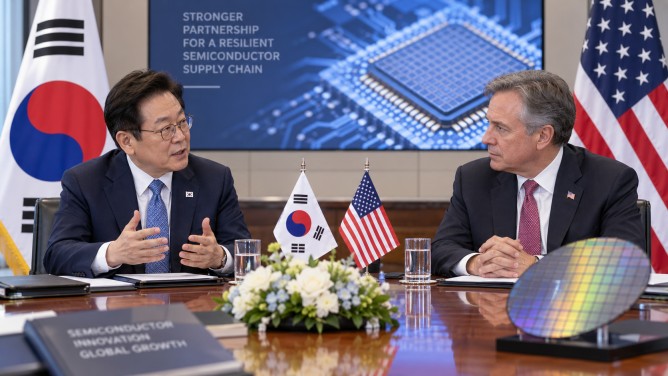
South Korea and the United States are currently in talks about potential semiconductor investments in America, as part of a larger framework of bilateral negotiations. This comes at a time when the U.S. administration is contemplating the imposition of new tariffs on semiconductor imports. Officials in Washington have suggested that companies could incur additional expenses if they do not increase their semiconductor manufacturing footprint within the United States.
Last year, South Korea agreed to invest $350 billion in U.S. manufacturing as part of an investment deal. A key aspect of this agreement ensures that South Korean chipmakers would face tariff rates no less favorable than those given to other major semiconductor trading partners. This arrangement is particularly significant for South Korea, which hosts major semiconductor giants like Samsung Electronics and SK Hynix, renowned for their memory-chip production.
As the demand for semiconductors continues to grow, driven by technology companies’ expanding investments in artificial intelligence infrastructure, these discussions have gained increased importance. Samsung Electronics and SK Hynix have been at the forefront of meeting this surge in demand, which has further underscored the need for a collaborative approach between the two nations on semiconductor production and trading.
In addition to the semiconductor talks, South Korean officials have indicated that discussions with Washington over national security matters, particularly related to Seoul’s ambitions to develop a nuclear-powered submarine, have seen limited advancement. These separate negotiations underscore the multifaceted nature of U.S.-South Korea relations, encompassing both economic and security dimensions.