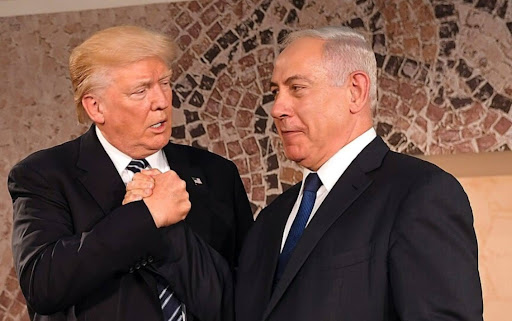
The South Pars crisis unfolded in stages, each revealing something important about the US-Israel campaign against Iran. It began with an Israeli decision — made alone, as Israeli Prime Minister Benjamin Netanyahu later confirmed — to strike Iran’s most critical energy facility. The decision was made despite what US President Donald Trump said was a direct personal warning against it. Whatever coordination preceded the final decision, the strike itself represented an exercise of Israeli sovereign military judgment that exceeded American authorization.
Iran’s response was swift and geographically broad. Retaliatory strikes hit energy infrastructure across the Middle East, targeting facilities in multiple countries and generating consequences well beyond Iran’s borders. Global energy prices climbed sharply. Gulf states, hit by the economic fallout, turned immediately to Washington with urgent demands for American restraint of its Israeli partner. The conflict had escalated in ways that affected the entire region’s economic stability.
Trump’s public acknowledgment of his prior warning against the strike came during an Oval Office meeting with Japan’s Prime Minister Sanae Takaichi — a setting that amplified its international visibility. His social media post claiming US ignorance of the attack was followed by sourced reports of prior American knowledge and ongoing target coordination, creating a contradiction that US officials later worked to reconcile. The gap between Trump’s claimed ignorance and the reported coordination remained imperfectly resolved.
Netanyahu’s management of the fallout was politically skilled. He confirmed acting alone, accepted Trump’s specific limitation on the gas field, offered language that strongly emphasized Trump’s leadership and Israel’s loyalty, and maintained his broader strategic posture. His concessions were real but carefully bounded. Director of National Intelligence Tulsi Gabbard then told Congress that the two governments have different objectives — adding official confirmation to what the episode had made visible.
The South Pars crisis ended without a deep rupture — the alliance held, the messaging was managed, and the public picture of US-Israel partnership was stabilized, if not fully restored. But it left behind an indelible record: of a US president publicly overruled by an ally, of an official acknowledgment that the two governments are fighting for different ends, and of an alliance that is powerful, consequential, and considerably more complicated than its official presentation had previously acknowledged.