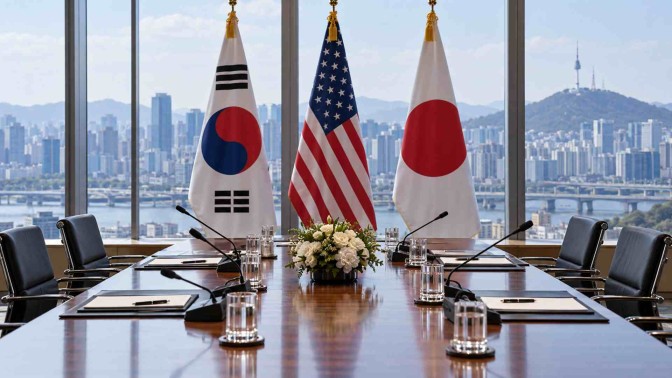
South Korean Foreign Minister Cho Hyun is scheduled to meet with U.S. Secretary of State Marco Rubio and Japanese Foreign Minister Toshimitsu Motegi in Atlanta on Friday. This meeting, held on the sidelines of the G20 foreign ministers’ gathering, aims to bolster trilateral cooperation between South Korea, the United States, and Japan, particularly in addressing the ongoing security challenges posed by North Korea.
The discussions will primarily focus on North Korea’s recent ballistic missile tests, leader Kim Jong-un’s visit to China, and the coordination of efforts to maintain pressure on Pyongyang for denuclearization. The meeting occurs amidst newly imposed U.S. sanctions on North Korean IT-worker networks, accused of contributing to the funding of the country’s weapons programs.
Despite the collaborative efforts to address North Korean issues, the meeting takes place against a backdrop of mounting tensions within the South Korea-U.S. alliance. Recent diplomatic frictions have arisen due to visa delays for South Korean lawmakers traveling to the U.S. for official duties, prompting Seoul to request expedited processing. Additionally, unresolved issues such as U.S. restrictions on intelligence sharing about North Korea and the slow progress in consultations on South Korea’s proposed nuclear-powered submarines add to the strain.
Questions concerning the transfer of wartime operational control of South Korean forces further complicate the alliance dynamics. The postponement of the annual South Korea-U.S. Security Consultative Meeting until early 2027 has raised concerns about completing the transfer during President Lee Jae Myung’s term. Despite these challenges, South Korean officials assert that these disagreements do not signal a breakdown in the alliance, as consultations with Washington continue to address outstanding security and defense commitments.
During his visit to the U.S., Foreign Minister Cho also engaged with representatives of South Korean companies operating in Georgia, Alabama, and Tennessee. Business leaders expressed concerns over travel procedures, tariffs on steel products, and the necessity for stronger engagement with U.S. federal and state authorities. In response, Cho pledged ongoing government support for South Korean businesses investing in the U.S. and vowed to use diplomatic channels to enhance cooperation with American officials and lawmakers.